

In 2009, I contributed a chapter to a publication called The Future of Yorkshire & Humber [i] In my chapter, ‘Achieving Sustainable Development’, I posed the question, “At a time when the regional structures of the last decade are being overhauled, is this a golden opportunity to progress sustainable development?” Looking back on the 15 years since then, it’s hard not to conclude that the opportunity was squandered. I went on to identify four policy priorities:
- a massive programme of retrofitting state-of-the-art energy and water efficiency measures to our existing building stock;
- serious public finance intervention to make public transport substantially cheaper than driving;
- strategic targets for increasing the ecological capital and resilience of the region, building on current green infrastructure, biodiversity and climate change adaptation objectives; and
- sustained effort to support community-based initiatives, entrepreneurs and education, so that in a few years every local community will be enthusiastically pursuing sustainable development, in their own way.
How is that 15 years later the same priorities are even more urgent but so little real progress seems to have happened?
Certainly, the governance opportunities I’d hoped for were lost. Post-austerity and post-regionalism, it has taken a long time to reach the current position where devolution is back on the agenda. In the meantime, local authorities have tried valiantly to continue pursuing climate action in the face of relentless budget cuts. There is hope, though, with significant progress since 2009 in terms of leadership-level commitment to climate action. Public sector bodies made Climate Emergency declarations, the UK 2050 net zero target was enshrined in legislation and most local authorities have set local targets sooner than 2050.
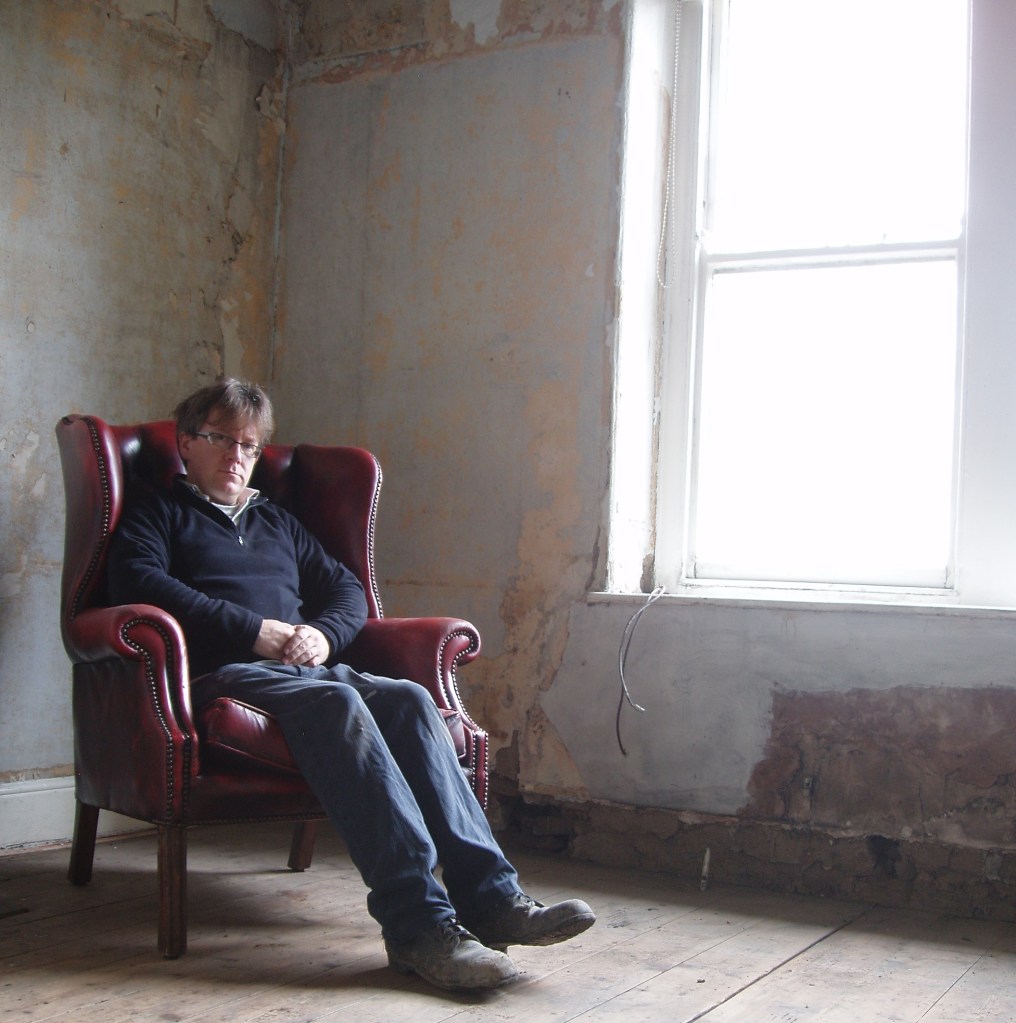
In 2011, perhaps frustrated by the lack of progress in the policy arena, I ventured into the practical field. Drawing on my architectural training, my previous first-hand experience of house refurbishment, and the guidance of someone already working in retrofit, I started providing design and advice for private clients, and teamed up with a couple of jobbing contractors to do some installations. At the same, my wife and I bought a crumbling old house which we spent several years fixing up, and I was full of high-minded ideas of using the place as a testing ground and demonstrator.
As a lapsed architect, there was something of the dream job about this. I could meet interesting people, have a good nosey around their old buildings, and help them to create retrofit solutions tailored to their needs. Every job was different and interesting. In a small, terraced house on a main road, we combined internal wall insulation with secondary double-glazing that provided at least as much sound insulation from the traffic as it did energy saving. In a listed building used as a physiotherapy clinic, we explored thinner, high-performance insulation for the walls, separate heating controls for each consulting room, and did a detailed analysis of the vaulted brick undercroft to figure out the best method of underfloor insulation. In an 18th century cottage with a 1950s extension, it was all about how the two structures joined together. Even with ‘standard’ terraced houses, no two were alike once you started looking – and with motivated clients it was fascinating and rewarding work with happy customers.
Yet it proved too hard to scale this up to become a decent source of income for me. My friendly contractors were over-committed and didn’t need the work. I had no spare time for marketing, finding partners or increasing my own expertise, and I became busy with more lucrative, desk-bound consultancy work. My retrofit venture fell by the wayside.
14-15 years later, the hard-to-treat (or expensive-to-treat) retrofit sector is still a niche endeavour and people are still living in homes that are too cold, sometimes too hot, draughty and damp. The need is still growing: energy costs are soaring, and overheating threatens to become as problematic for these old places as a cold snap.
The difference that upgrading my own home made cannot be overstated. We went from heavy curtains taped shut during the winter to having bright, comfortable rooms whose temperatures hardly fluctuate. Whilst EPC ratings are far from robust as a basis for evaluation, I estimate that we have gone from a low E or high F, to a mid-range C. The heating system is heat-pump ready, so that now the current gas boiler is nearing its demise we should be able to go gas-free and further reduce our carbon footprint and energy demand. Everyone who visits us comments on how comfortable the house feels. We also made mistakes and would do some things differently if we were ever to take on another such project.
I was troubled recently by meeting some conservation experts who argued that pre-1919 buildings would be adequately energy-efficient if only they were brought up to a good standard of maintenance and enabled to ‘work as they were originally designed to’. That isn’t correct. They are right that poor maintenance is a huge problem: a lot of the building work I undertook at home was remedying previous, shockingly bad workmanship. Badly-installed insulation can create a raft of problems, most notably the ubiquitous arc of black mould in the corner of a room where a gap in the thermal envelope is encouraging condensation. But going back to the original specification won’t work, because pre-1919 buildings were designed to function around vast inputs of cheap coal for heat, and fast throughflows of air to dispose of the resulting soot pollution.
Just as a steam locomotive is pretty and fun, but couldn’t possibly be part of a modern transport system, pre-1919 buildings were solving a different problem than the one we face today, and they are systemically unfit for purpose in the modern age. We absolutely need to make our housing stock fit for purpose, which means making it low-energy, low-carbon, healthy and comfortable.
Considering the fascinating diversity of buildings, their users’ needs and financial circumstances, plus the wide range of technical solutions, it now seems clear to me that the ‘massive insulation programme’ I wrote about in 2009 is a misnomer. What we actually need is hundreds of thousands of different projects, all tapping into reliable sources of knowledge, quality assurance regimes, skilled designers and technicians, working for willing clients. Some of these projects will fail, some buildings will develop problems, some clients will be disappointed – but at the macro-scale the results will come. If this sounds unrealistic, it shouldn’t, because it’s exactly what happens with the central heating and double-glazing industries already. We all know someone who has had a bad experience, but most of us have central heating and double-glazing nonetheless.
Reflecting on my 2011 “OK, I’ll do it myself then!” moment, I realise I was trying to use my own experience to identify the solution, the magic formula. I think that was a mistake; but I can see the same risk now playing out at the strategic level – each initiative wants to become the definitive way forward. In my view, this misses the real opportunity, that there are many, many good initiatives out there and we need to let them be diverse: we need to create the conditions in which diverse initiatives flourish, and learn from the problems that each one has to try and solve. We know that these conditions include availability of skills, material supply chains, finance and quality assurance. The trick is to provide the right conditions and the strategic direction without being prescriptive about the solutions.
[i] https://www.smith-institute.org.uk/wp-content/uploads/2015/10/TheFutureofYorkshireandtheHumber.pdf
 goodplanconsulting.co.uk
Leave a comment