

There’s a persistent – and wrong – notion that working is productive and cultural life is not. When thinking about achieving climate action – especially the thorny issue of modal shift in travel – we could try the opposite proposition: culture and creativity form the essence of human productivity, and work is mainly valuable insofar as it enables our cultural and creative lives.
Having the time, space and bandwidth to breathe, think and dream are prerequisites for new ideas to emerge. This bandwidth arises from having enough wealth and health not to be pre-occupied by survival, and an urge to be creative. Creative downtime is vital for human society and is formative of most cultural activity: everything from religious worship and sport to food, music and literary festivals take place in our creative downtime. These things generate huge amounts of economic activity in themselves, and when people have spare time they go places, spend money, consume things – without people having creative downtime the economy and society would grind to a halt. but there is good evidence that people are more productive in their day jobs when they have time off. People with a good amount of free time can bond with friends and family, do activities and be healthier – and are therefore also less costly in welfare.
Yet we don’t tend to design places on this basis. Instead we design them around people’s paid employment, especially in transport where arterial routes, travel-to-work areas, rush hours and ring roads are the building blocks of our travel systems. A major repercussion of COVID has been more home-working which, whilst suiting many people, can cement inequalities by favouring those who have the type of work that can be done from home and the room for a separate workspace in their homes. For many, the spare space at home that was previously recreational – a guest bed for visitors, an art space or writing desk, has been repurposed for paid work. Often, our paid jobs are not as happy or fulfilling as we would wish, but we can live with that if other areas of our lives provide fulfilment: family, hobbies, holidays, friends, artistic pursuits.
Businesses don’t really cluster together to shorten the time and costs in their supply chains – they cluster in places where their workforce is productive, which in turn means places where people can have fulfilling, creative downtime. Conversely, this is why co-locating work premises and residential neighbourhoods doesn’t seem to reduce demand for travel. For one thing, people’s cultural lives are not governed by where they work, except in the philanthropic planned towns of the Industrial Revolution (e.g. Saltaire and Port Sunlight) or in hellscape company towns in California. The majority of people’s travel happens in people’s cultural and personal lives, not in their commute, so our persistent inability to reduce travel demand arises precisely because we use journeys to work and school as the main ingredients of analysis and policy. What’s more, travelling is a cultural and creative activity – we do it because it enables us to experience things and sometimes because the journey itself is enjoyable. So if a mode of travel is available and affordable, people will travel.
Even with commuting-based journeys, there is a cultural component. I am more likely to use the train for work because I can pop into a shop, café or pub as part of my day, and meet a friend, which is much nicer than spending my time in traffic. My wife usually commutes by car because her workplace is out of town and lacks these cultural opportunities, but she takes advantage of having the car by sometimes dropping in to see her parents on the way home, going to the gym or to an out-of-town shop for a friend’s birthday present.
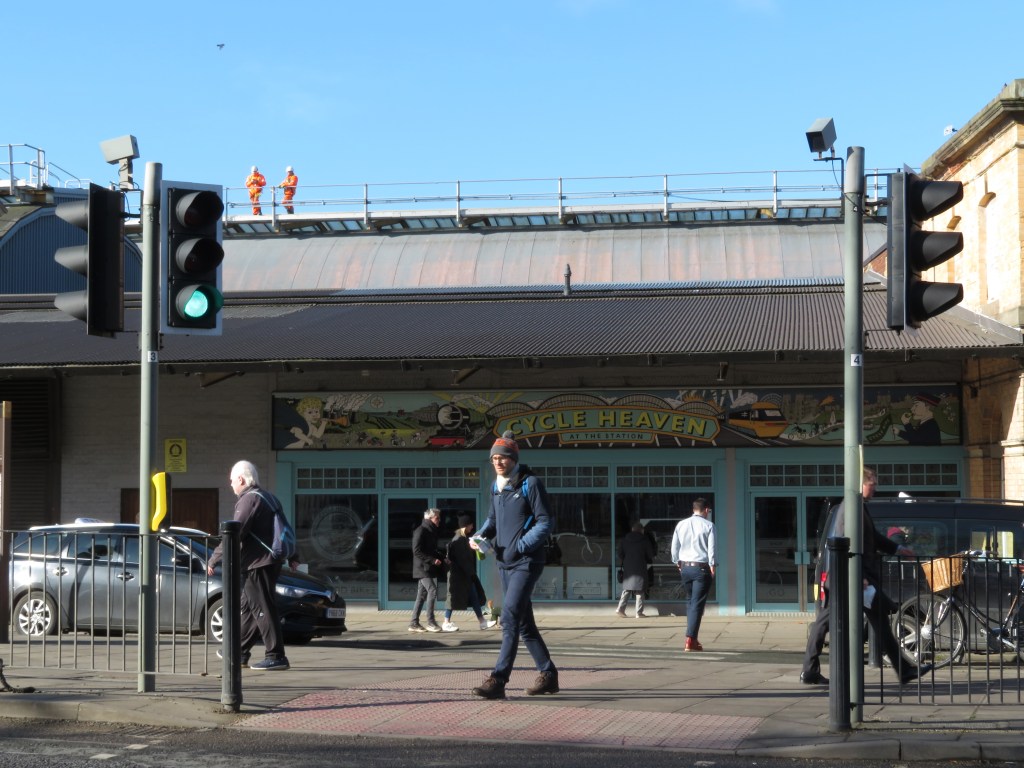
Clustering creative and cultural opportunities around good walking, cycling and public transport networks is crucial to shifting travel behaviour. Arguably, that is what a town centre is supposed to be, but it’s not enough for it to be centralised in a hub-and-spoke network. Routes between suburban neighbourhoods – and between groups of villages – need to combine cultural spaces such as parks, shops and community facilities with measures to re-allocate roadspace away from cars and towards other modes. This could mean quite minor interventions such as re-timing a pedestrian crossing or addressing a safety pinchpoint for cyclists, though it probably does depend on significant improvements to public transport. But it also involves some smart planning and financial interventions to enable cultural facililities to spring up in neighbourhoods; whilst recognising that some people will nevertheless visit them by car.
One problem here is out-of-town leisure developments that are islands in an ocean of free parking. Weaning ourselves off this form of development is as vital as it is tricky. It could be partially achieved by bringing residential development into those locations and making them into real places. Gateshead is attempting to do this for the Metrocentre by redeveloping land outside the shopping centre for housing and other uses and improving the cycling connections to the town centre along the riverside. In Sheffield, the Supertram route from the city centre to Meadowhall passes through a long swathe of land dominated by low-density retail sheds, car showrooms and leisure uses; looked at creatively there is huge potential to create new neighbourhoods with good tram connections.
If we are to create places that are meaningfully liveable without cars, we need to start from the destinations we like to visit – especially reaching beyond the trendy, unencumbered thirty-somethings who populate artists’ impressions of urban design projects. What types of journeys do these destinations generate, and how can we reshape the travel choices for those journeys? A friend mentioned only this week that when they park at a city centre shopping centre in Leeds they can get their car valeted while they’re shopping and having lunch. My immediate thought was, “Why on earth would anyone drive into central Leeds, that’s a nightmare scenario I avoid at all costs?” but of course people make complex decisions and I’m not judging them. Hell, I’ve even driven in central London not so long ago. Sometimes – if you have a car – then using it is the right choice at the time regardless of how short the journey or how available the alternatives are. Making modal shift real means accepting that a car-based choice is still OK, but making it a less likely choice and one that doesn’t disadvantage you if you don’t have use of a car.
 goodplanconsulting.co.uk
Leave a comment