

Can planning meet society’s big challenges if it remains adversarial? I have long suspected not, and the risks of not securing social licence are becoming ever more apparent.
There’s recently been footage circulating via LinkedIn of more than one instance of Councillors on Planning Committees being both ignorant of planning law and rude towards Planning Officers. We should draw two lessons from this. Firstly, there is no excuse for our elected officials being rude, abusive or unaware of their statutory duties. Secondly, we need to resist the temptation to simply mock, and delve into the emotional context that leads to this bad behaviour.
For me, the answer lies in social licence. It was only when I started teaching the concept at university that it really came alive for me. Social licence offers a useful way of understanding why the relationship between politics and the planning system is in trouble.
The full term is “social licence to operate.” It originates in the mining industry where a company might obtain all the legal permits needed to open a mine next to a small town. On paper, that licence is enough. But operating without the acceptance of the people who live there is risky, unstable, and often unsustainable. That additional, informal consent of the community is the social licence.
Historically, companies have addressed this challenge in various ways, some more ethical than others. In modern democratic societies, the usual approach is to convince communities that the benefits outweigh the harms.
At a time when planning reform continues to be in the news, it’s worth remembering that the whole history of UK planning reform goes back to a 1960s crisis of social licence. The Skeffington Report in 1969 led to the introduction of statutory requirements for public participation because communities felt that sweeping changes to their towns were happening without their consent. Slum clearance, modernist redevelopment, ring roads and flyovers reshaped cities at speed, often with little regard for the people living there.
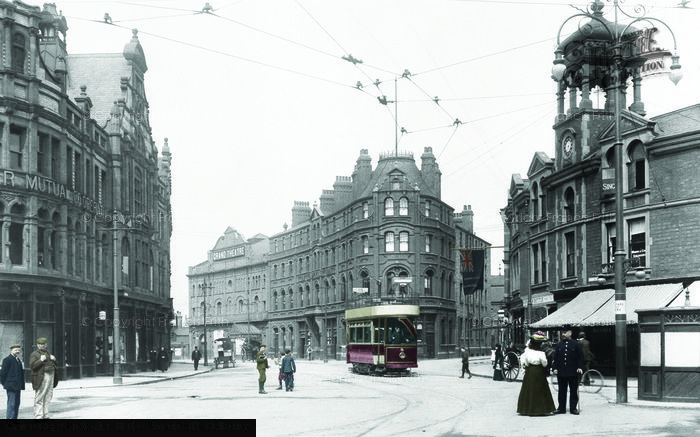
The physical scars of that period are still visible today. In my hometown of Doncaster, a grand Victorian town centre—not quite up there with Newcastle’s Grainger Town, but certainly something to be proud of—was flattened and replaced with a monolithic shopping centre. A ring road severed the Market, the Minster and the railway station from each other. It’s an act of urban vandalism the town has never truly recovered from. It still makes my teeth hurt every time I see it.
Arguably, this was the result of an “authorities know best” mentality running riot and, in my view, goes some way to explaining why planning is often viewed with suspicion.
Today’s planning system has some longstanding faults, and its adversarial set-up may be its worst. Planning invites objection rather than dialogue. Objectors must demonstrate that a plan is unsound or that a proposal is unacceptable. The promoter and the objector inevitably become mutually demonised.
The result is a system whose outcomes rely on contrived binaries that seem nonsensical if you’re not a planner, like these ones I’ve seen first hand:
- a Planning Inspector reminding a Local Plan examination that “I’m not here to improve the Plans, only to determine whether it’s sound”;
- a local community slowly realising – with bewilderment – that the fate of a housing scheme they’re opposing hinges on whether the authority has 4.9 or 5.1 years of housing land supply;
- a decision-maker weighing up whether a development’s traffic impact is technically “severe” enough to justify refusal.
It is hard to see development as a positive instrument of placemaking when decisions hinge on such technicalities.
Social licence provides a useful way of thinking about what is missing. To secure genuine social licence, planning decisions need to clear three thresholds: legitimacy, credibility and trust.
Legitimacy: do people accept the authority and good faith of the decision-maker?
At present this is fragile. A small but worrying minority of councillors either lack the skills required for planning committees or treat meetings as opportunities for political theatre. But the response from government and parts of the profession—that the role of planning committees should simply be reduced—risks making matters worse.
Mandatory training for committee members is welcome and much-needed – as some Councillors’ outbursts ably demonstrate. But if we start to assume that officers make good decisions while elected councillors make bad ones, we undermine the democratic legitimacy that planning depends on. When legitimacy disappears, people start looking for other ways to resist decisions.
Credibility: do people accept the evidence behind decisions?
Here, too, the system struggles. Communities ask obvious questions and receive wholly unsatisfactory answers. For example, if evidence tells us 90,000 new homes per year should be for social rent, why is that not mandatory? If zero-carbon homes are only marginally more expensive to build than those meeting current regulations, why are we not already requiring them? If biodiversity is still declining, why introduce legislation that weakens environmental protections?
The government understandably wants to set and meet an ambitious housebuilding target. But communities can see with their own eyes that focusing narrowly on numbers often produces poor quality development. That makes the system hard to believe in.
Trust: do people trust that what gets built will match what was promised?
Trust in the built environment has been badly damaged. To understand how hard it is for ordinary people to trust authority when it comes to our environment and health, we need only ask: how was the Grenfell disaster allowed to happen, and why are our rivers full of sewage?
I believe most people in the development industry are acting in good faith, just as most objectors are motivated by genuine concern for their neighbourhoods. But mutual demonisation corrodes the public discourse and makes it much harder for development to secure social licence. Conversely, even if consensus might be a stretch, building mutual understanding through community participation should unlock better development.
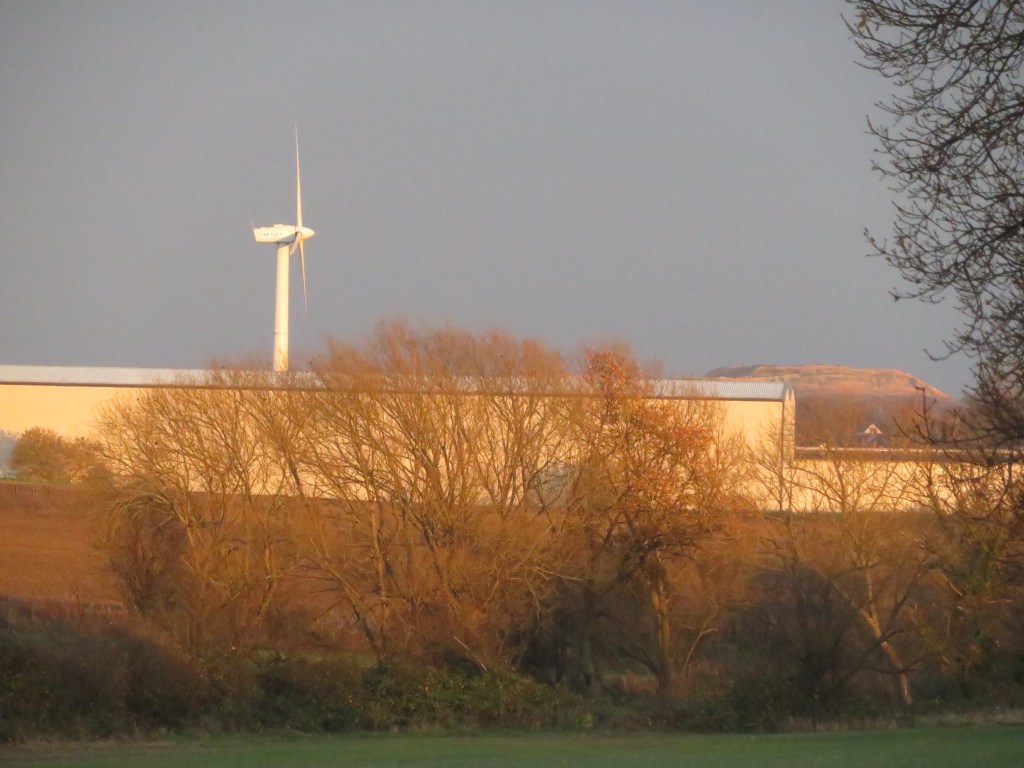
Government policy has not helped. At times it has raised the bar for social licence to almost impossible levels—most notably with the ‘de facto ban’ on onshore wind turbines that required explicit local backing. By contrast, the current rhetoric of “backing the builders over the blockers” loudly implies that objections to development are inherently not legitimate, and seems designed to relieve development of its social licence responsibilities. Consider the draft revised NPPF’s introduction of a national decision-making policy to give a “default yes” to development near accessible railway stations. This is a well-intentioned policy, because it makes sense to focus development in highly accessible locations. But the policy specifically precludes an area’s Local Plan from having a say in this matter, which sends a clear message that the government doesn’t trust local authorities – and local communities – to make the kinds of decisions it wants them to make. If government won’t extend trust to communities, it should not expect to receive it.
The result is a precarious situation in which important reforms risk losing social licence altogether. Strategic planning could easily be portrayed as a return to top-down control. Efforts to accelerate housing and renewable energy development could provoke a backlash. The incoming Environmental Delivery Plans have already been branded “cash to trash”, a label that will be difficult to shake.
Even where policies are well-intentioned, the problems of legitimacy, credibility and trust remain.
Securing a ‘social licence to develop’ must be a core value of the planning system, and at present it is not being upheld. At the risk of seeming idealistic, I suspect it will prove very difficult to secure social licence unless we can break out of the adversarial model, that is configured to pit viewpoints against each other. There is an urgent need to foster compromise and a degree of trust between those who profit from change and those who fear it.
 goodplanconsulting.co.uk

Leave a comment